





Bookster: o carte-surpriza si un kit care te duce in copilarie



Expectations vs. Reality at Your First Job
You’ve landed your first full-time job. 🎉
You imagined feeling proud, confident, fulfilled and maybe even a bit like the main character (which yu totally are). Finally, a foot in the door. You’ve arrived.
But a few weeks in, things feel… different.
The tasks seem basic. You’re unsure if you’re doing them right. Your manager is kind but distant, or even just distant. Feedback is vague. You start wondering:
“Is it just me, or is this not what I signed up for?”
Here’s the truth: it’s not just you.
Gen Z enters the workforce with high expectations: purpose, flexibility, quick growth, inclusion - and rightly so. But the reality of entry-level jobs can be humbling. You're not alone. A lot of Gen Z experience this. It's not an universal experience, but it happens for a lot of us: our first job is not what we expected and we do not feel how we thought we would.
Let’s break it down.👇
Expectation:
“I’ll work on meaningful projects, be mentored, grow fast, get recognized and feel accomplished.”
Reality:
-
You’re doing repetitive tasks
-
Your learning curve feels slow
-
You’re unsure where you stand
-
The team is nice, but busy
-
You’re second-guessing your skills
The mismatch isn’t failure, it’s actually part of the learning process. Most people experience it, even if they don’t post about it on LinkedIn.
⚙️ Real-Life First Job Situations (and How to Deal With Them)
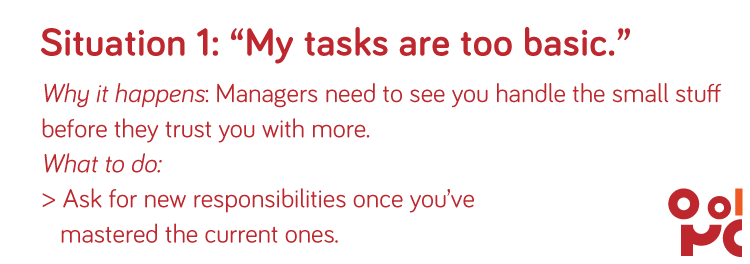
Sounds familiar?
Here is a possible way to deal with this situation and what to say: “I’ve got the hang of these reports, is there a new area I can support with?”
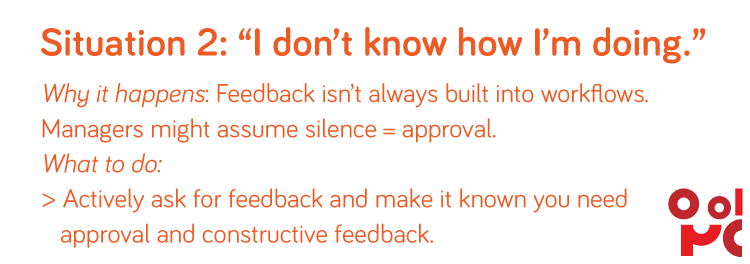
For this type of situation, keep in mind you are probably learning by doing, with a detailed plan or not, you are new at this, so asking for feedback when it's not given to you be default, it's totally the right move, as it shows commitment and engagement in the tasks at hand . A proactive attitude is generally appreciated and encouraged.
Here is how you can actually say it: “Is there anything in the last report that I could improve? I’d love to learn how to get better at this task and to know how to improve.”
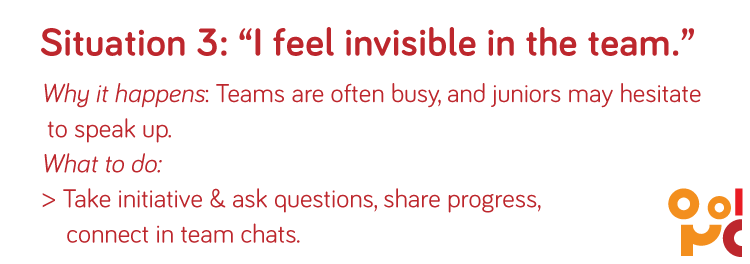
If this is how you feel right now, don't get upset, because we have good news! The reason why this is probably happening It's because the work volume and the level of responsability in you team are very high, or because the time period is a stressful one for your team, which is why they seem to be leaving you out.
Even so, feeling left out in a team is not okay and does not feel good, which is why you should speak up and let them know, so the team adjusts. Because you are part of it now and your feelings and tasks are just as important. Don't be afraid to speak up and let them know how they make you feel.
In this case, you can speak up like this:“Hey, I saw you’re working on X. I’d love to learn more about that if you ever need an extra hand.”
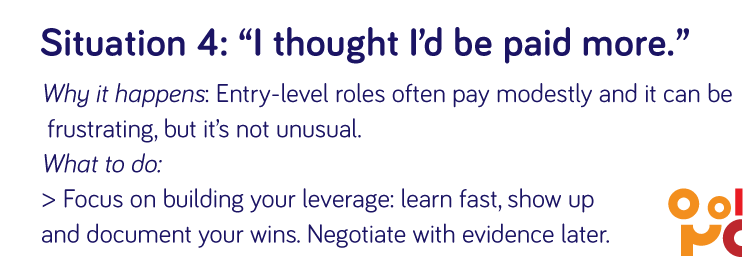
If this is your situation now, don't get discouraged. Try to make your case. If your manager disregards you, try once again, at a later time. If you feel like your job is not giving you what you want and deserve, maybe it is time to try and look for more opportunities.
Do not be afraid to switch things up, jobs or career paths. For a lot of us, it's more of a 'learning by doing' type of thing. So keep trying, keep doing you, and you'll go far.
Why Reality Can Be Better Than the Dream
You grow more from the messy parts of your first job than from the shiny ones.
-
You build resilience when you’re bored but still show up
-
You gain confidence when you speak up, even if unsure
-
You learn faster when you make mistakes and recover
-
You develop grit when progress is slow but steady
A perfect first job doesn’t teach you these things. A real one does.
Practical Tips for Navigating Reality
✅Ask for feedback early & often✅ Show up with curiosity, not ego
✅ Learn how to get along with everyone
✅ Advocate for yourself: ask for clarity,
✅ Don’t compare your Day 1 with someone else’s Year 3
Until next time!